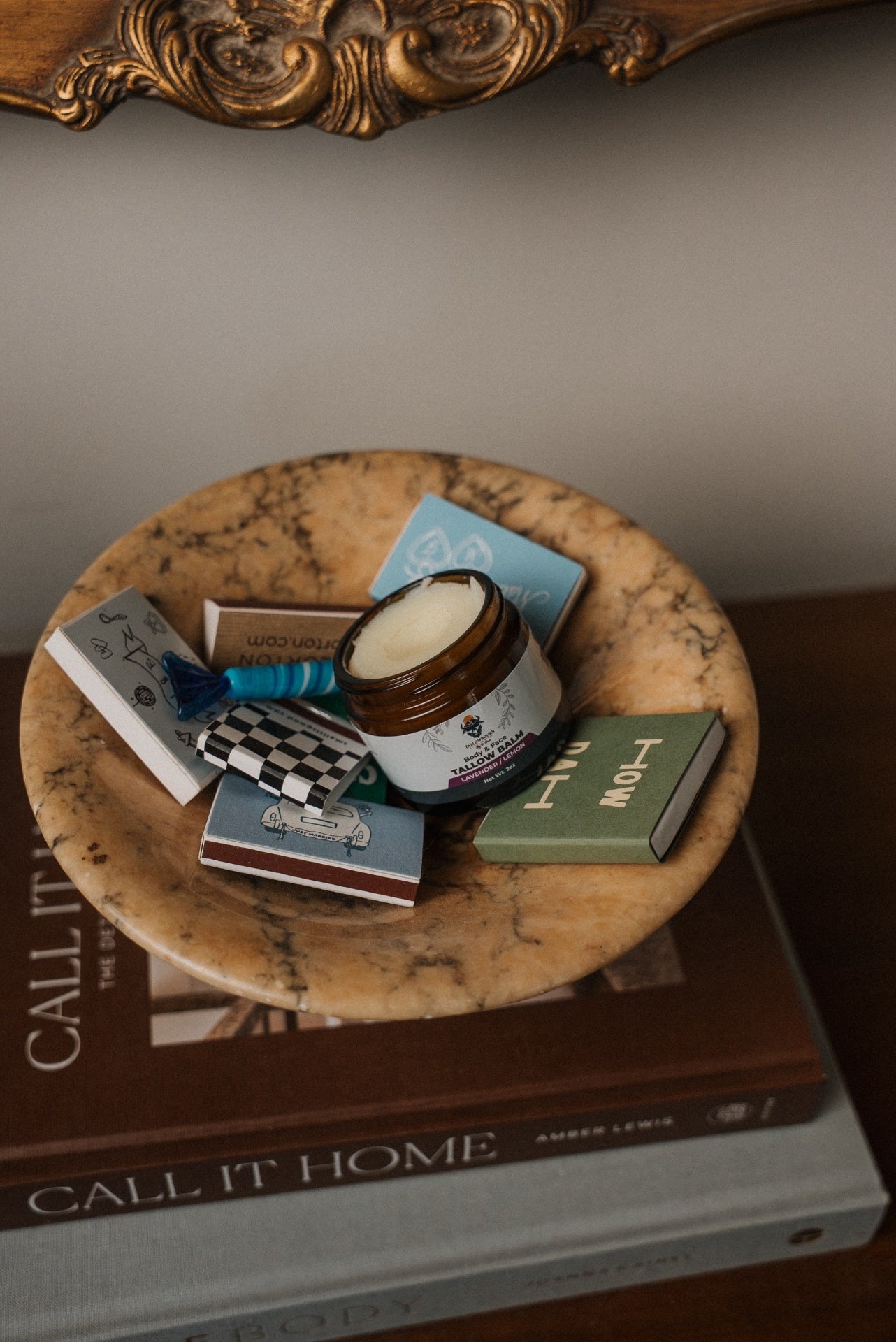
The ingredients worth avoiding in skincare are the ones that either disrupt your skin's natural functions or introduce unnecessary synthetic compounds when simpler alternatives exist. Sulfates strip your protective oils. Undisclosed fragrance blends irritate sensitive skin. Petroleum derivatives coat without nourishing. Parabens raise questions most people would rather not deal with when there are preservative-free alternatives available.
This isn't about fear. It's about reading labels and making choices based on what actually helps your skin versus what's in a product because it's cheap or extends shelf life.
Why Ingredient Lists Matter More Than Marketing
The front of a skincare product tells you what the brand wants you to think. The back tells you what's actually in the jar. Most people never flip the bottle over. Those who do often find a list of 20 to 40 ingredients, many of them unrecognizable.
Here's a useful rule: if you can't identify more than half the ingredients on a label, ask yourself whether your skin really needs all of that. A good moisturizer doesn't require 30 components. Our body balm has six. Every one of them serves a purpose you can understand.
That doesn't mean every synthetic ingredient is bad. Some are fine. But when simple, effective alternatives exist, why add complexity?
Sulfates: The Aggressive Cleaners
Sodium lauryl sulfate (SLS) and sodium laureth sulfate (SLES) are surfactants found in most commercial soaps, shampoos, and cleansers. They produce the big, foamy lather people associate with "clean." But that lather comes at a cost: sulfates strip your skin's natural lipid barrier along with the dirt.
Your skin barrier is made of lipids (fats) that lock in moisture and keep irritants out. When you strip those fats twice a day with a sulfate cleanser, your skin has to rebuild that barrier from scratch each time. For people with dry or sensitive skin, that cycle of strip-and-rebuild never quite catches up. The result is persistent dryness, tightness, and irritation.
The alternative is a cleanser made with fats your skin recognizes. Our tallow soap cleans through saponification (the chemical reaction between fat and alkali), which produces a gentler cleansing action that removes dirt without decimating your lipid barrier. It's the difference between pressure-washing a surface and wiping it clean.
Undisclosed Fragrances: What's Actually Worth Worrying About
"Fragrance" or "parfum" on an ingredient list is a catch-all term that can contain dozens of individual compounds. Under current regulations, fragrance formulas are considered trade secrets, so companies aren't required to disclose what's in them. For people with sensitive skin, not knowing what's in the blend makes it nearly impossible to figure out which compound is causing a reaction.
But let's be honest about something: fragrance isn't inherently dangerous, and the "all chemicals are bad" angle doesn't hold up to basic science. Essential oils are chemical compounds too. Lavender oil is 20-40% linalool. Citrus oils are loaded with limonene. Both are known allergens that the EU requires listed on cosmetic labels. "Natural" scent and "synthetic" scent are both chemistry. Everything is.
The real question is what specific compounds are in the blend and whether the ones with documented problems have been excluded. Phthalates, for instance, are used in many conventional fragrance formulations to make scent last longer, and they've been flagged for endocrine disruption concerns. That's a specific, evidence-based reason to care about what's in a fragrance blend.
At Tallowbourn, we use essential oils in most of our scented products and phthalate-free, paraben-free fragrance oils in select variants like Vanilla & Sandalwood. Both are formulated well within IFRA (International Fragrance Association) safety guidelines, which set maximum usage levels for individual scent compounds based on toxicological research. Those guidelines apply to essential oils and fragrance oils equally because the safety evaluation is based on the compounds themselves, not whether they came from a plant or a lab. We're not anti-fragrance per say. We just exclude the specific compounds (and classes of compounds) that the evidence says are worth excluding.
Petroleum Derivatives: Coating vs. Nourishing
Mineral oil, petrolatum (petroleum jelly), and paraffin are all derived from petroleum refining. They're in skincare because they're cheap, shelf-stable, and create an immediate feeling of smoothness. But here's what they actually do: they sit on your skin's surface and form a seal.
That seal prevents water loss (occlusion), which sounds useful. And temporarily, it is. But petroleum derivatives don't provide any nutrients to your skin. They don't contain fatty acids your skin can use. They don't support barrier repair. They just sit there.
Compare that to tallow, which contains oleic acid, stearic acid, palmitic acid, and vitamins A, D, E, and K. Your skin absorbs these because they're the same class of molecules it's built from. You get occlusion plus nourishment. That's a meaningful upgrade over petroleum.
Parabens: The Preservative Question
Methylparaben, propylparaben, butylparaben, and ethylparaben are preservatives used to prevent microbial growth in skincare products. They're effective at that job. But they've become controversial because of research showing they can be detected in human tissue after topical application.
The debate about parabens is ongoing, and I'm not going to pretend the science is settled. What I can say is that paraben-free preservation is entirely achievable. Natural formulations with low water content (like our tallow-based products) are inherently resistant to microbial growth. Beeswax, vitamin E, and honey provide additional preservation. I test every batch for microbial load before release. No parabens needed.
Artificial Colorants: Zero Benefit
FD&C dyes are in skincare products for one reason: they make the product look pretty in the bottle. They provide zero benefit to your skin. Some are known irritants, particularly for sensitive skin types. There's no reason for a moisturizer to be bright blue or pink. If a product needs artificial color to look appealing, that's a marketing decision, not a skincare one.
Chemical Sunscreens vs. Mineral Sunscreens
Chemical sunscreens (oxybenzone, avobenzone, octinoxate, homosalate) absorb UV radiation through chemical reactions in your skin. Mineral sunscreens (zinc oxide, titanium dioxide) sit on top of your skin and physically reflect UV rays.
Chemical sunscreens have drawn scrutiny because some of them absorb into the bloodstream at levels that exceed FDA recommended thresholds. Oxybenzone in particular has been widely studied and is banned in Hawaii and Key West for its effects on coral reefs.
Mineral sunscreens don't absorb into the skin. They stay on the surface and deflect UV. The trade-off used to be a visible white cast, but modern formulations (including our tallow sun balm) have improved significantly. I use non-nano zinc oxide in a tallow base, which provides broad-spectrum protection without the concerns associated with chemical UV filters.
How to Read a Skincare Label
A few quick guidelines for evaluating any skincare product:
Shorter is usually better. Not always, but a product with 5 to 10 recognizable ingredients is easier to evaluate than one with 35.
Ingredients are listed by concentration. The first few ingredients make up the bulk of the product. They are listed by highest percentage first to lowest percentage last. If water is first and the active ingredients are near the bottom, you're paying mostly for water.
Google what you don't recognize. It takes 30 seconds to look up an ingredient. If you still can't figure out what it does after reading about it, your skin probably doesn't need it.
What We Use Instead
Every Tallowbourn product is built on a grass-fed tallow base. The rest of the ingredients are things you've heard of: jojoba oil, beeswax, shea butter, honey, coconut oil, essential oils, zinc oxide, vitamin E. No petroleum derivatives, no parabens, no sulfates. In rare cases where we use fragrance oils, they're phthalate-free and paraben-free.
I formulate every product myself using the experience I obtained over the last two decades with PhD in organic chemistry. I started this brand because my mom had persistent skin issues and nothing from the drugstore was helping. When you know exactly what's in the jar and why each ingredient is there, you don't need a 30-item ingredient list. You need the right six.
The Bottom Line
You don't need a chemistry degree to make better skincare choices. You need to flip the bottle over, read what's there, and ask whether each ingredient is serving your skin or serving the manufacturer's bottom line.
Simple ingredients that match your skin's biology will always outperform complicated formulas full of synthetics. That's not ideology. It's how skin works.
Frequently Asked Questions
Are all synthetic ingredients bad?
No. But the majority aren't helpful and in some cases are hurtful. The point isn't to reject everything synthetic on principle. It's to question whether a synthetic ingredient is necessary when a simpler, natural alternative does the same job. In most cases, your skin doesn't need 25 ingredients to stay healthy and moisturized.
How do I know if I'm sensitive to a specific ingredient?
If you're getting irritation, redness, or breakouts from a product, stop using it for a week. If symptoms clear up, the product was the problem. Then look at the ingredient list and compare it to other products you've tolerated. The ingredients present in the irritating product but absent from your safe products are your likely culprits. Common triggers: SLS, and certain essential oils.
Is "natural" always better than "synthetic"?
Not automatically. Poison ivy is natural. The question isn't natural versus synthetic. It's whether an ingredient serves a genuine function for your skin and whether it's safe for long-term daily use. I choose natural ingredients at Tallowbourn because for moisturizing, cleansing, and skin barrier support, the best options happen to be natural. Specifically, fats and waxes that match your skin's own chemistry.
What about preservatives? Don't products need them?
Products with high water content need preservatives because water breeds bacteria. Anhydrous (water-free) formulations like our tallow balm are inherently more resistant to microbial growth. I add natural preservation (beeswax, vitamin E, honey) and test every batch. No synthetic preservatives required. We also 3rd party our products for microbiology before release.
How do Tallowbourn products compare on ingredient count?
Our body balm has 6 ingredients (unscented). Our lip balm has 4. Our soap has 4 to 5 base ingredients plus essential oils or clays depending on the variant. Compare that to a typical drugstore moisturizer with 25 to 40 ingredients. I'm not minimalist for the sake of it. I just don't add things that don't serve your skin.
Aren't essential oils chemicals too?
Yes. Lavender oil contains linalool, linalyl acetate, and dozens of other terpenes. Peppermint oil is mostly menthol and menthone. Everything you put on your skin is a chemical compound, whether it came from a plant or a lab. The relevant question is whether specific compounds in a product have documented safety concerns and whether the formulator has excluded them. That's why we use phthalate-free, paraben-free fragrance oils in our scented variants and clearly state that on the label.
Ready to simplify your ingredient list?
Tallowbourn products are built with ingredients you can read and understand. Every formula starts with grass-fed tallow as the foundation: body balm, lip balm, tallow deodorant, soap, and sun balm. Simple ingredients. Real results. No BS.
Browse our full collection at tallowbourn.com
Written by Dr. Dave, Founder of Tallowbourn | PhD, Organic Chemistry